Department of Russian and Slavic Studies Condemns Russia's Invasion of Ukraine

Feb. 26, 2022
Image

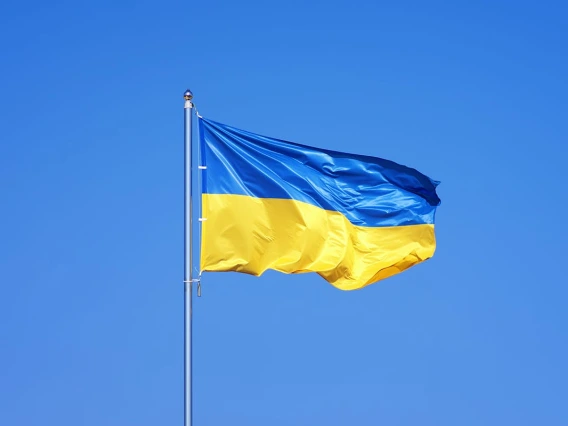
The Department of Russian and Slavic Studies condemns Russia’s assault on Ukraine. The University of Arizona is the home of many scholars and students who have spent their lives studying Ukraine, Russia, and other nations in Eastern Europe and Eurasia. Many of us are from the region, have family and friends suffering there, and are heartbroken by the war and its toll on Ukraine and Eastern Europe. As a department within the College of Humanities, we are dedicated to educating students to become concerned, global citizens. We abhor war and violence and urge leaders and citizens around the world to do everything in their power to put an end to this war, help those affected by it, promote peace in the region, and end the humanitarian catastrophe in Ukraine.

The Creature Feature

Hosted by the Slavic & Eurasian Club

When
11 a.m. – 1 p.m., Oct. 31, 2025

Please join the Slavic & Eurasian Studies Club for an exciting event with costumes, prizes, dancing, games, music, food and drinks!

Don't miss out! Get ready for an afternoon filled with community and fun! Bring your friends and celebrate Halloween with the Slavic & Eurasian Club

Farron Shanahan

Associate Director of Development - Foundation Relations
University of Arizona Foundation
B.A.
Russian
2019
B.A.
Psychology
2019

Studying Russian Language turned me into a calculated risk-taker and a master communicator. Thought I don't actively use the language, the skills pertaining to thoughtful communication and connecting with others have proven crucial to the field of fundraising and development. Studying abroad also taught me so much about trusting myself above everything else. Navigating a foreign country where my mother tongue was not the standard forced me to be vulnerable in a way I have never experienced. Being so vulnerable and out of my comfort zone allowed me the space to reckon with myself and learn what my true values were. I also had to really trust my gut, more than I ever had to before, and this prepared me for more than just my career, it prepared me for life.

Image
Farron Shanahan

Daniela Gonzalez

Graduate Student
University of Arizona
B.A.
Russian
2025
B.A.
Spanish
2025

I will start a Russian Master’s degree in the fall and upon completion of that degree, I plan to pursue a career in the Foreign Service. The Humanities prepared me by giving me the opportunity to be flexible, open to making mistakes while learning a new language, broadening my understanding of the world through study abroad, and learning to be kind and compassionate of language learners as I continue to learn Russian and expand my skills as a translator.

Image
default profile image

Sabrina Sulaymonova

Law Student
ASU Sandra Day O’Connor College of Law
B.A.
Russian
2025

I am attending ASU’s Sandra Day O’Connor College of Law and pursuing my JD! My degree encouraged me to think critically and broadened my world view.

Image
Sabrina Sulaymonova

Department of Russian & Slavic Studies End-of-Semester Celebration

Congratulations!

When
4 – 5:30 p.m., April 30, 2025

The Department of Russian and Slavic Studies invites all RSSS faculty, majors, minors, graduate students, and students in RSSS classes to join us for a celebration of student achievement as we close the Spring 2025 semester.
 

Light refreshments will be served.

RSSS 910 - Thesis

Submitted by Anonymous (not verified) on

Research for the master's thesis (whether library research, laboratory or field observation or research, artistic creation, or thesis writing).

Units
1-6
Grade Basis
Alternative Grading: S, P, F

RSSS 699 - Independent Study

Submitted by Anonymous (not verified) on

Qualified students working on an individual basis with professors who have agreed to supervise such work. Graduate students doing independent work which cannot be classified as actual research will register for credit under course number 599, 699, or 799.

Units
1-5
Grade Basis
Alternative Grading: S, P, F

RSSS 696E - Post-Soviet Literature and Culture of Russia, Eastern Europe and Eurasia

Submitted by Anonymous (not verified) on

This course provides an in-depth overview of the major literary and artistic trends of the late 20th Century to the present day, surveying the transition from the Soviet to post-Soviet period, with a special focus on how Postmodernism interacts with and/or reflects the Post-Soviet condition. Students will explore a variety of responses to the legacy of state communism and the transition to a new political and economic regime. We will discuss the rise of Postmodernism in the late 20th century and its relation to the period of transition in the 1990s. Students will be able to discuss recurrent themes in this multinational literature (such as paranoia, carnival, dislocation, corporeal experience, crime and mafia, nostalgia) and the varied literary techniques employed (palimpsest texts, unreliable narrators, misdirection and mystification, use of popular genres, metanarrative). Finally, we will consider how the literary traditions of the region evolve and respond to contemporary events and trends in the 21st century as the various nations in the region embark on a search for a post-Soviet national identity.

Units
3
Grade Basis
Regular Grades